

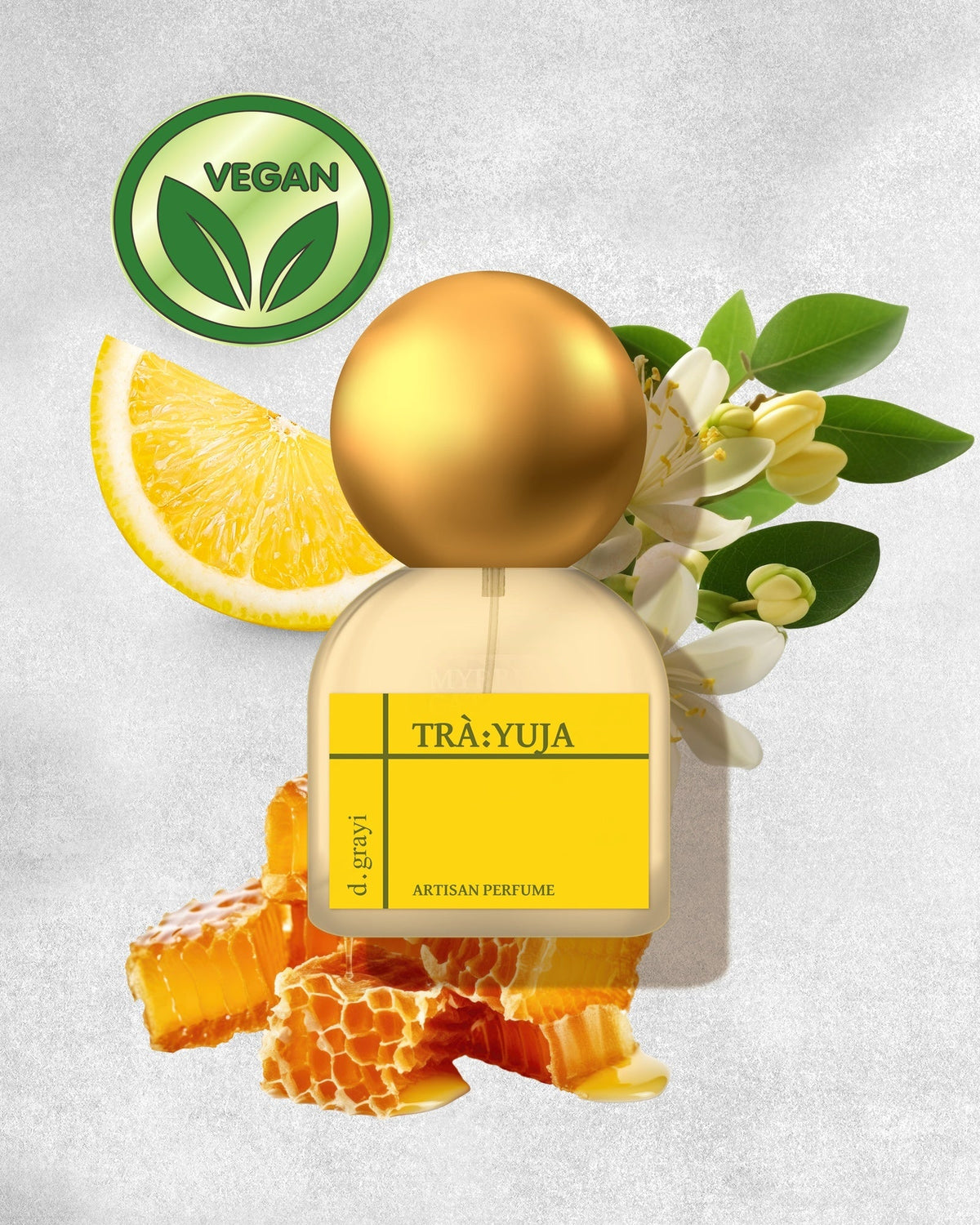
YUZU vs. YUJA in Perfumery
An AAPI Perfumer’s Perspective on Citrus
Citrus notes are often grouped together in fragrance but not all citrus feels the same.
In western perfumery, bergamot is often seen as the most versatile and maybe one of the most beautiful citrus note out there. This may be true but I find myself gravitating towards yuzu & yuja so much more!
YUZU? YUJA? CITRUS Junos? These ingredients that are frequently confused because they are the same but where its grown changes the quality and experience you receive. In culinary uses, they can finish off both savory and sweet dishes as well as bright brightness to beverages. This makes it a good workhorse when it comes to perfume creations. YUZU and Yuja can create completely different emotional directions.
Yuzu: Bright, Sharp, and Slightly Peppery
Yuzu is the most well known japanese citrus. My friends in Japan will pick the fruit from the yuzu trees in their neighborhood and use the peel in many ways. They wouldn ferment the rinds and add to spicy chili's. Use the fresh zest in savory dishes. They would dry the peels to use in teas throughout the year. Some would incorporate the fruit into their beauty regimen.
From a perfumer’s perspective, yuzu isn’t just citrusy, it has a distinct edge.
It tends to feel:
bright and sparkling
tart and aromatic
with a subtle peppery nuance
That peppery quality gives it lift without being too aldehydic. It doesn’t just sit in a composition, it pushes outward, adding energy and movement towards the top.
Yuzu is often used when a fragrance needs:
freshness with character
something sharper than bergamot
a more expressive openundertones
It can bridge the scent story where woody, herbal undertones are needed to be spot lit.
When it comes to perfume making, I see many of my peers hesitant to use japanese yuzu and gravitate towards korean yuja instead. This makes sense to me because when I smell different qualities of Japanese yuzu, I sense more medicinal notes that might be considered a turn-off for mass appealing composition. Korean Yuja would be the better fit.
Yuja: Soft, Sweet, and Jam-Like
The sweet aspect of the citrus fruit is a huge benefit of yuja. In korea, yuja marmalade or yuja tea is most likely the popular choice of preparation. Its also used for with other sweet applications as well as some marinade and sauces.
Scent wise, Yuja moves in a different direction. Yes, it does keep the feeling of brightness and sharpness, but it leans:
sweeter
more rounded
slightly jammy or candied
It can feel closer to a citrus preserve than a fresh aldehydic peel. Not in a bad way at all. This is what makes it easier to use.
In fragrance, yuja creates:
warmth
comfort
a sense of familiarity
Where yuzu feels airy and sharp, yuja feels grounded and soft.
It is great in perfumery because the sweetness and softness can be paired with sharper less expensive citruses to create a similar affect to Japanese YUZU or it cam be paired with aroma molecules to create a long lasting yuja yuzu hybrid.
Explore Citrus in Our Fragrances
If you’re curious how these ideas translate into actual perfumes, you can explore our collections where we incorporate yuja, yuz, as well as other botanical from our culture into scent.

Written by LV1 Studio


Leave a comment
This site is protected by hCaptcha and the hCaptcha Privacy Policy and Terms of Service apply.